What Is App Store Conversion Rate Optimization?
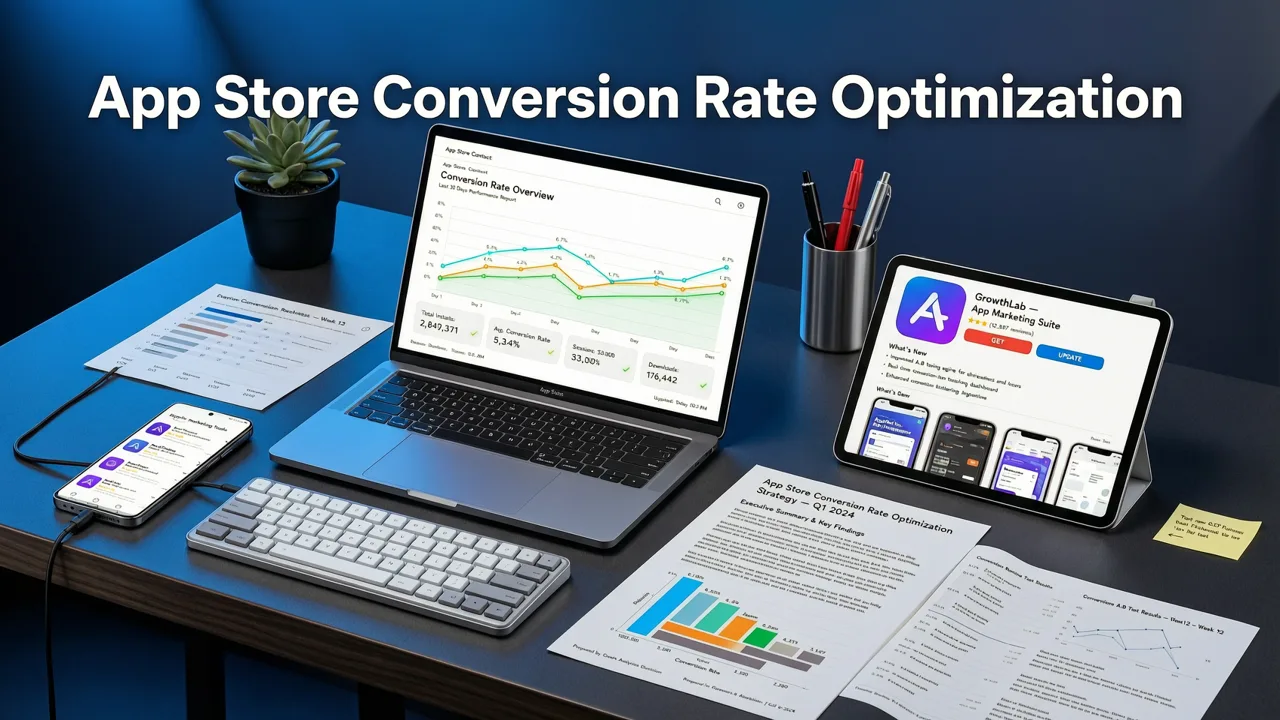
App store conversion rate optimization is the strategic process of refining your application's visual and textual assets to maximize the percentage of users who install your app after viewing its listing. In an era where organic discovery is highly competitive, simply ranking for high-volume keywords is not enough. If your listing fails to convert impressions into downloads, your overall growth stalls. This guide outlines the foundational principles and advanced tactics required to master app store conversion rate optimization in 2026, ensuring your mobile app growth strategy translates visibility into measurable user acquisition.
Why App Store Conversion Rate Optimization Matters in 2026
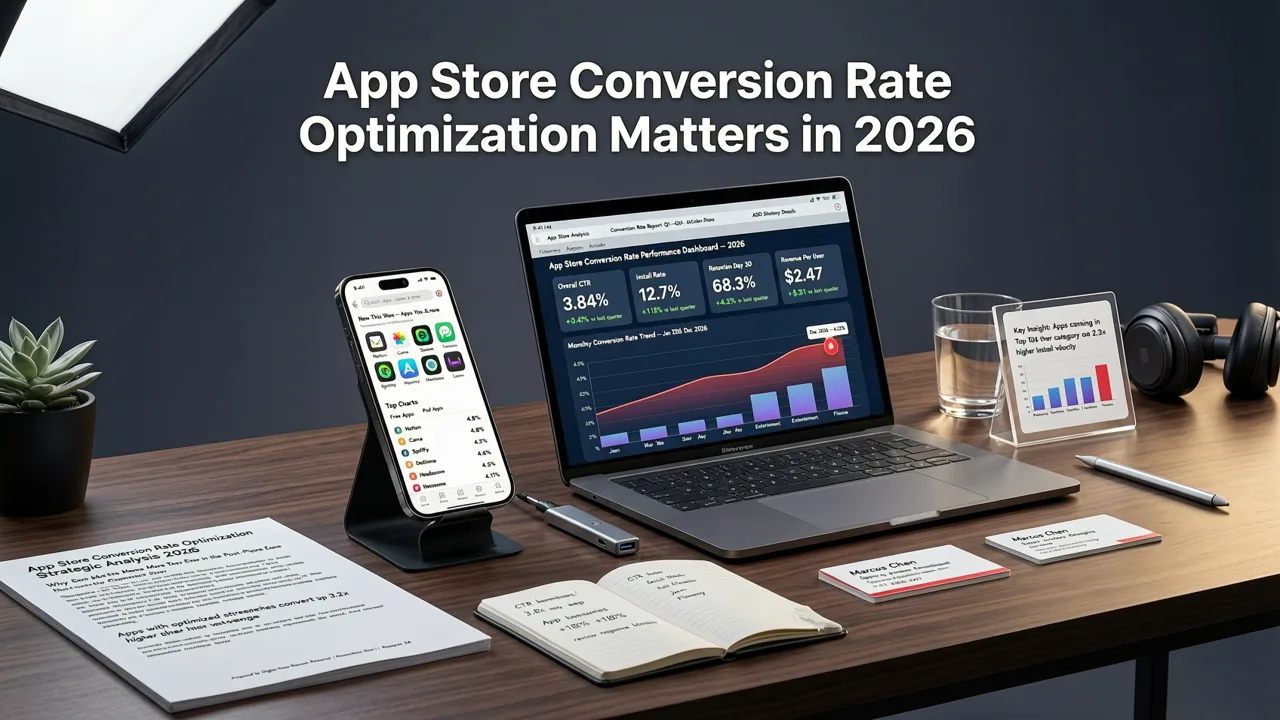
The mobile app ecosystem has evolved significantly. With the proliferation of AI-generated app listings and increasingly sophisticated user expectations, standing out requires more than just basic keyword placement. Privacy-first attribution models mean that every organic download carries more weight for long-term retention and monetization. Furthermore, as app stores refine their algorithms to prioritize user engagement and satisfaction, the quality of your listing directly influences your search ranking. A well-optimized listing signals to the algorithm that users find your app relevant and valuable, creating a positive feedback loop that boosts both visibility and organic downloads.
The Core Elements of App Store Conversion Rate Optimization

Improving your conversion rate requires a holistic approach to your app store presence. Every element of your listing plays a specific role in guiding the user from discovery to installation.
4 Mistakes Killing Your App Store Conversion Rate
by Mobile Marketing
App Icon and Visual Identity
The app icon is the first point of visual contact for a potential user. It must be instantly recognizable, scalable across different device sizes, and distinct enough to stand out in a crowded search results page. In 2026, successful icons avoid cluttered details and overly complex gradients, favoring bold, simple shapes and high-contrast colors that communicate the app's core value at a glance.
Screenshots and App Previews
Visual assets are the primary drivers of app store conversion rate optimization. Users rarely read the full description before making a decision; they scan the screenshots. The first three screenshots are critical, as they are often visible without scrolling. Effective screenshots should not just display the user interface, but rather highlight the core benefits and features of the app. Using concise, action-oriented captions alongside the visuals helps articulate the value proposition quickly. App preview videos should be used to demonstrate the app's functionality and user experience, capturing attention within the first three seconds.
Text Metadata and Value Proposition
While visual assets drive the initial interest, text metadata seals the deal. The title and subtitle must clearly state what the app does and why the user should care, balancing keyword relevance with readability. The description should be structured with clear headings, bullet points, and short paragraphs to enhance scannability. For a deeper dive into refining your textual assets, the App Store Metadata Optimization Guide for 2026 provides comprehensive strategies for aligning your copy with both user intent and algorithmic requirements.
A Step-by-Step Framework for App Store Conversion Rate Optimization
Implementing a successful optimization strategy requires a systematic approach. Relying on guesswork leads to inconsistent results. Follow this framework to build a data-driven optimization process.
1. Analyze Current Baseline Metrics
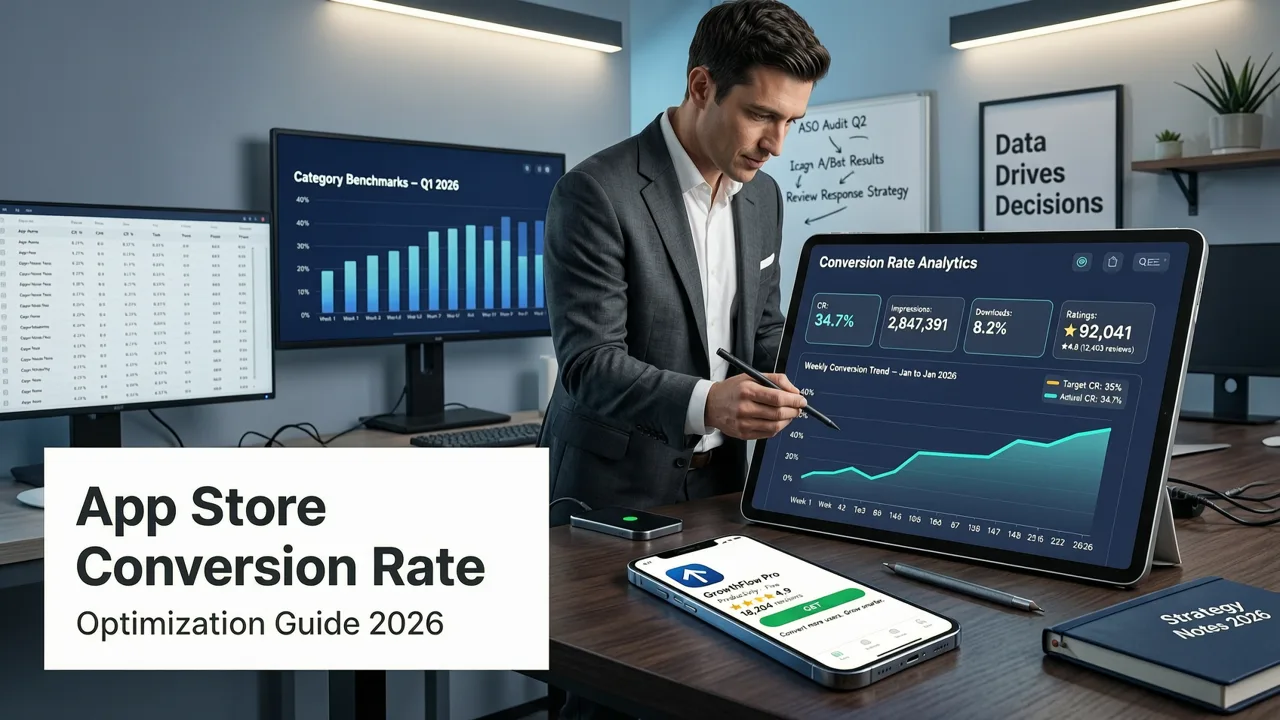
Before making changes, establish a clear understanding of your current performance. Track your impression-to-install conversion rate, tap-through rate from search results, and overall download velocity. Identify which specific keywords are driving the most impressions and compare your conversion rates against category benchmarks. This baseline will serve as the foundation for measuring the impact of your optimization efforts.
2. Conduct Competitor Visual Audits
Analyze the top three to five competitors in your primary category. Examine their icon design, screenshot layouts, color palettes, and caption strategies. The goal is not to copy them, but to identify market conventions and find opportunities for visual differentiation. If all competitors use dark backgrounds, a light, vibrant aesthetic might help your listing stand out.
3. Implement Structured A/B Testing
A/B testing is the cornerstone of app store conversion rate optimization. Both the Apple App Store and Google Play Store offer native experimentation tools. When running tests, isolate a single variable at a time, such as the first screenshot or the app icon. Ensure your test runs long enough to achieve statistical significance, typically a minimum of two to four weeks, depending on your traffic volume. Avoid making multiple changes simultaneously, as this makes it impossible to determine which alteration drove the performance shift.
4. Localize for Global Markets
Direct translation of your metadata and visual assets is a common pitfall. True localization involves adapting your screenshots, captions, and descriptions to reflect cultural nuances, local idioms, and regional design preferences. An asset that performs exceptionally well in the United States may underperform in Japan or Germany due to differing visual expectations and communication styles.
App Store Conversion Rate Optimization: iOS vs. Android
While the core principles of conversion rate optimization remain consistent across platforms, the iOS App Store and Google Play Store have distinct interface behaviors and algorithmic preferences. Understanding these differences is crucial for tailoring your strategy.
| Feature | iOS App Store | Google Play Store |
|---|---|---|
| Primary Conversion Driver | Screenshots and App Icon | App Icon and Short Description |
| Screenshot Layout | Portrait orientation, vertical scroll | Carousel format, horizontal swipe |
| Video Autoplay | Autoplays silently on Wi-Fi | Autoplays silently on Wi-Fi and cellular |
| Text Indexing vs. Conversion | Title and Subtitle heavily indexed | Full description is indexed for search |
| Native A/B Testing Tool | Product Page Optimization (PPO) | Store Listing Experiments |
Common Mistakes to Avoid in App Store CRO
Even experienced app marketers can fall into traps that hinder their conversion rates. Avoid these common pitfalls to ensure your optimization efforts yield positive results.
- Cluttered Screenshots: Overloading screenshots with text or complex UI elements makes them difficult to read on smaller devices. Keep the focus on the core feature being highlighted.
- Ignoring the First Three Seconds of Video: If your app preview video has a slow intro or a generic logo animation, users will scroll past. Start immediately with high-value action or a compelling hook.
- Testing Too Many Variables: Changing the icon, the first screenshot, and the title simultaneously will invalidate your test results. Isolate variables to understand what truly impacts user behavior.
- Neglecting the Short Description on Android: While the full description is indexed on Google Play, the short description is what users actually read in the search results. Treat it as a critical conversion asset.
- Stopping After the First Test: App store conversion rate optimization is an ongoing process. User preferences and design trends shift continuously. Commit to a regular cadence of testing and iteration.
Conclusion
Mastering app store conversion rate optimization is essential for turning organic visibility into sustainable mobile app growth. By focusing on compelling visual assets, clear value propositions, and rigorous A/B testing, you can significantly improve your impression-to-install ratios. The app stores of 2026 reward listings that provide a seamless, informative, and engaging user experience from the very first impression. To ensure your entire listing is performing at its peak, utilize The Complete ASO Audit Checklist 2026 for App Growth to systematically evaluate and refine every component of your app's store presence.