What Is an ASO Keyword Research Strategy?
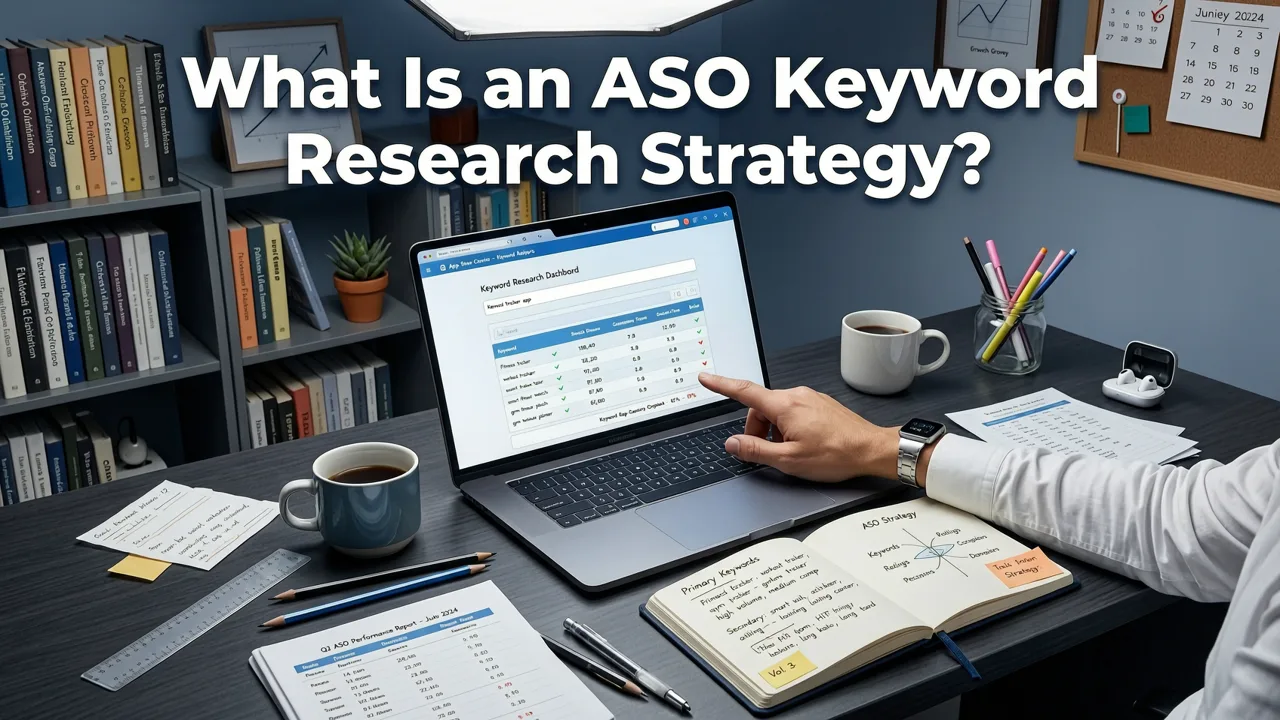
A successful mobile app launch in 2026 requires more than just a great product; it demands a highly targeted aso keyword research strategy to cut through the noise. App Store Optimization (ASO) is the process of improving an app's visibility and conversion rate within the Apple App Store and Google Play Store. At the core of this process is keyword research, which involves identifying the exact terms and phrases potential users type into the store search bars.
An effective aso keyword research strategy is a systematic approach to discovering, evaluating, and prioritizing these search terms. It bridges the gap between user intent and your app's core value proposition. Without a structured strategy, developers often waste metadata space on overly broad terms with massive competition or highly niche phrases with zero search volume. By building a deliberate framework, app publishers can systematically improve their search rankings, increase organic discoverability, and drive sustainable mobile app growth.
Core Components of a Modern ASO Keyword Research Strategy
To build a strategy that performs in the current app store algorithms, several foundational elements must be understood and balanced. Modern search engines within the app stores have evolved to understand semantic context, making simple keyword stuffing obsolete.
The Most Important Element of App Store Optimization (ASO Keyword Research)
by App Masters
Understanding Search Volume and Keyword Difficulty
Search volume indicates how many times a specific keyword is queried within the app stores over a given period. High-volume keywords offer massive potential reach but typically come with high keyword difficulty, meaning established apps with strong download velocity and high retention dominate those rankings. Conversely, low-difficulty keywords are easier to rank for but may yield fewer overall impressions. A robust strategy requires finding the optimal balance between relevance, volume, and difficulty.
Analyzing User Intent and Behavioral Signals
In 2026, app store algorithms heavily weight user behavioral signals, including tap-through rates, download velocity, and app engagement post-install. This means that selecting keywords that perfectly match user intent is critical. If a user searches for a specific tool and your app delivers exactly that, the resulting high conversion rate signals to the algorithm that your app is highly relevant for that term, further boosting your ranking.
Step-by-Step Guide to Building Your ASO Keyword Research Strategy
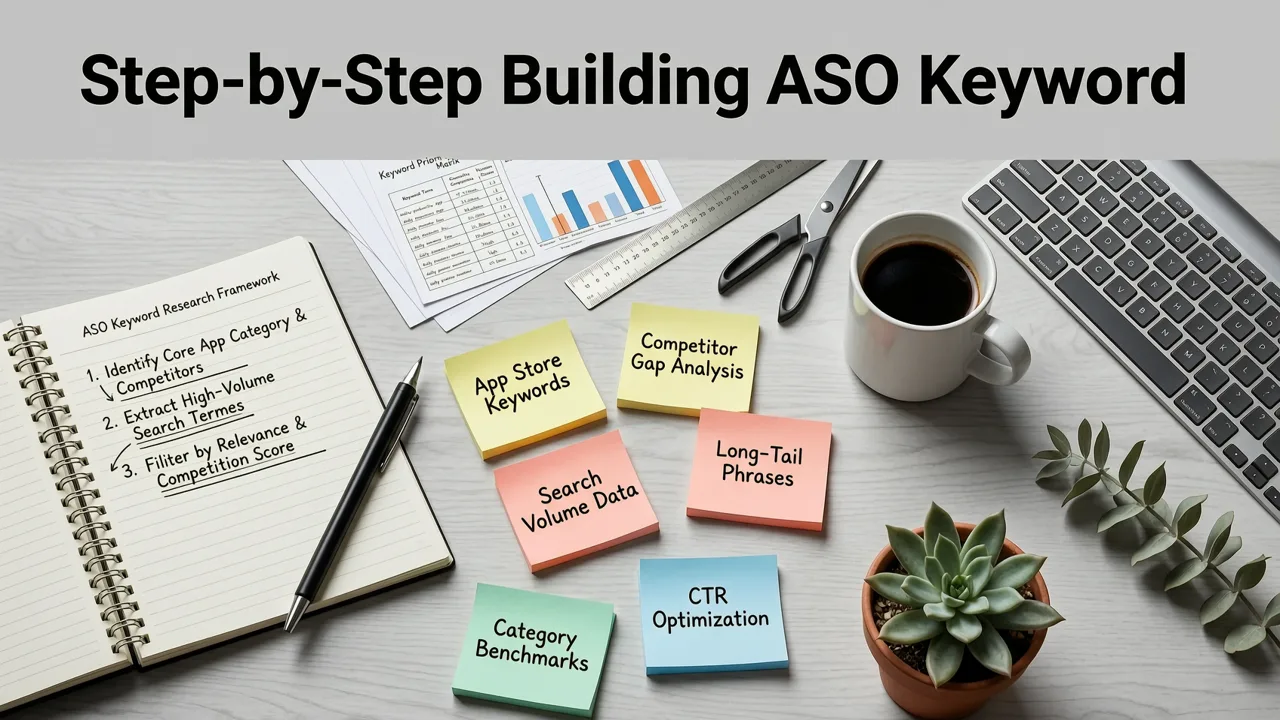
Creating a repeatable and scalable process ensures that your app's metadata evolves alongside market trends and algorithm updates. Follow these steps to construct a comprehensive framework.
Step 1: Brainstorming and Seed Keyword Generation
Begin by mapping out the core features, benefits, and problems your app solves. Put yourself in the shoes of your target audience. What would they type into the search bar to find a solution? Create a list of seed keywords that represent your app's primary category, secondary features, and unique selling propositions. Include synonyms, common misspellings, and localized variations if you are targeting global markets.
Step 2: Competitor Analysis and Metadata Scraping
Analyzing top-performing competitors provides actionable intelligence. Identify the top five to ten apps in your primary category and those ranking for your seed keywords. Examine their titles, subtitles, and keyword fields. Look for patterns in the terminology they use. Additionally, read through their user reviews. Reviewers often use natural language to describe the app's features, revealing long-tail keywords and behavioral phrases that you might not have considered during the initial brainstorming phase.
Step 3: Prioritization and Keyword Mapping
Once you have a broad list of potential keywords, evaluate them against three criteria: relevance to your app, estimated search volume, and keyword difficulty. Discard any terms that are not strictly relevant, as ranking for irrelevant terms will harm your conversion rate and confuse the algorithm. Map the remaining keywords to specific metadata fields based on their importance and the weighting rules of each platform.
iOS vs. Android: Platform-Specific Keyword Tactics
A critical aspect of any aso keyword research strategy is recognizing that the Apple App Store and Google Play Store process metadata differently. What works on iOS may be entirely ineffective on Android. Understanding these structural differences is mandatory for maximizing visibility across both ecosystems.
| Feature | Apple App Store (iOS) | Google Play Store (Android) |
|---|---|---|
| Primary Keyword Field | Dedicated 100-character keyword field. | No dedicated keyword field; relies on text metadata. |
| Title Weighting | Highest weight. Must include the most critical keyword. | Highest weight. Must be natural and include primary terms. |
| Subtitle / Short Description | Subtitle (30 chars) carries high weight for secondary keywords. | Short description (80 chars) is indexed and heavily weighted. |
| Long Description | Not indexed for search. Used purely for conversion. | Fully indexed. Keywords must be naturally integrated here. |
| Formatting Rules | Comma-separated, no spaces after commas, no repetition. | Natural sentences, keyword density matters, avoid stuffing. |
For iOS, the dedicated keyword field allows for a dense packing of terms without spaces after commas. You must avoid repeating words already used in the app title or subtitle, as the algorithm combines them automatically. For Android, the full description is indexed, meaning you must weave your target keywords naturally into the text. Over-optimizing or keyword stuffing in the Android long description can lead to penalties or poor user experience.
Integrating Keywords into Your Metadata
Once your strategy has identified the ideal keywords, the next phase is implementation. This requires careful attention to character limits and platform-specific weighting. For a deep dive into how to structure your titles, subtitles, and descriptions for maximum algorithmic impact, review the App Store Metadata Optimization Guide for 2026.
Remember that keywords only drive visibility; they do not guarantee downloads. Your visual assets, including the app icon, screenshots, and preview video, must align with the promise made by your keywords. If a user searches for a specific feature and clicks on your listing, the screenshots must immediately demonstrate that feature. This alignment between textual metadata and visual assets is what drives a high installation rate.
Measuring and Iterating Your Strategy
An aso keyword research strategy is not a one-time task; it is a continuous cycle of testing and refinement. App store algorithms update frequently, and user search behaviors shift with new trends and seasonal events. Establish a regular cadence for reviewing your keyword performance.
Monitor key metrics such as keyword rankings, impression share, and conversion rates. If a highly relevant keyword is generating impressions but not converting, the issue likely lies with your visual assets or value proposition rather than the keyword itself. In such cases, focusing on App Store Conversion Rate Optimization: The 2026 Guide will yield better results than changing the keyword.
Conversely, if a keyword is not generating impressions, it may be too difficult to rank for, or the search volume may have dropped. Use these insights to swap out underperforming terms in your metadata for new opportunities identified through ongoing competitor analysis and trend monitoring.
Conclusion
Building a successful aso keyword research strategy requires a blend of data analysis, user empathy, and platform-specific technical knowledge. By systematically identifying high-intent search terms, balancing volume with difficulty, and tailoring your approach to the unique rules of iOS and Android, you can significantly improve your app's organic visibility. For teams looking to scale these efforts and leverage expert insights, exploring the Best ASO Agency for Indie Developers: 2026 Growth Guide can provide the specialized support needed to accelerate mobile app growth in a competitive market.