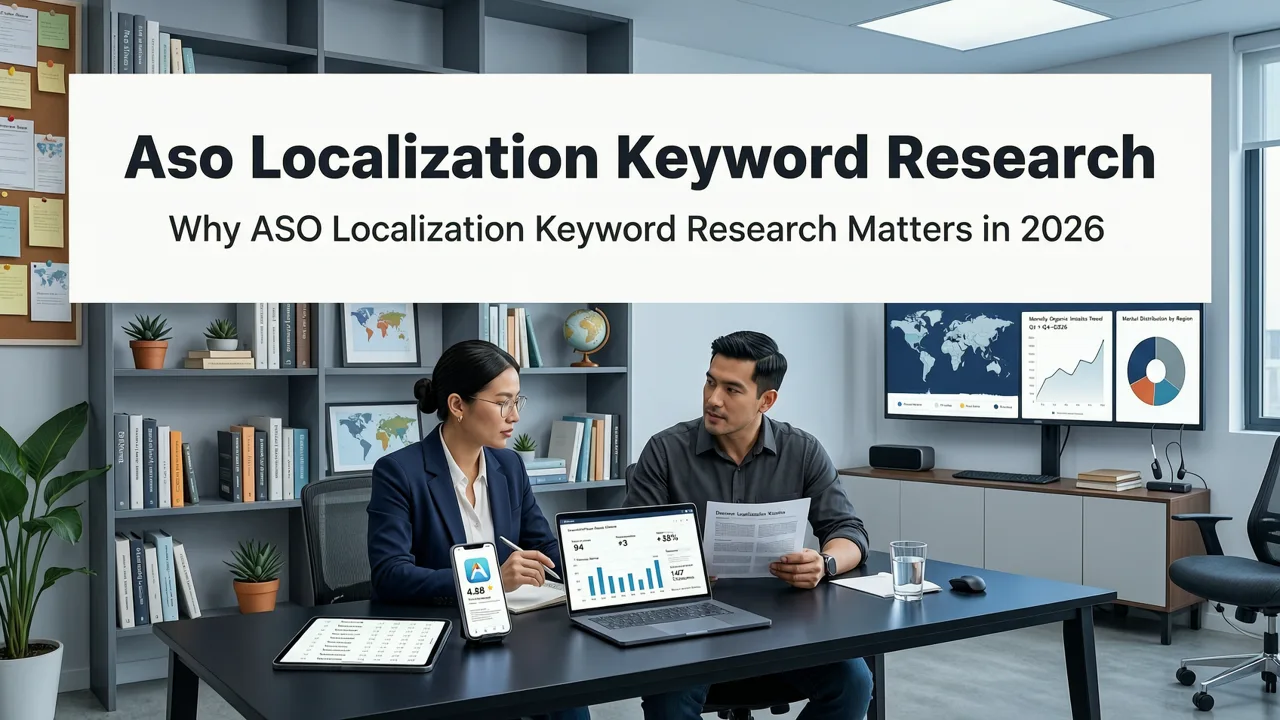
Why aso localization keyword research matters in 2026
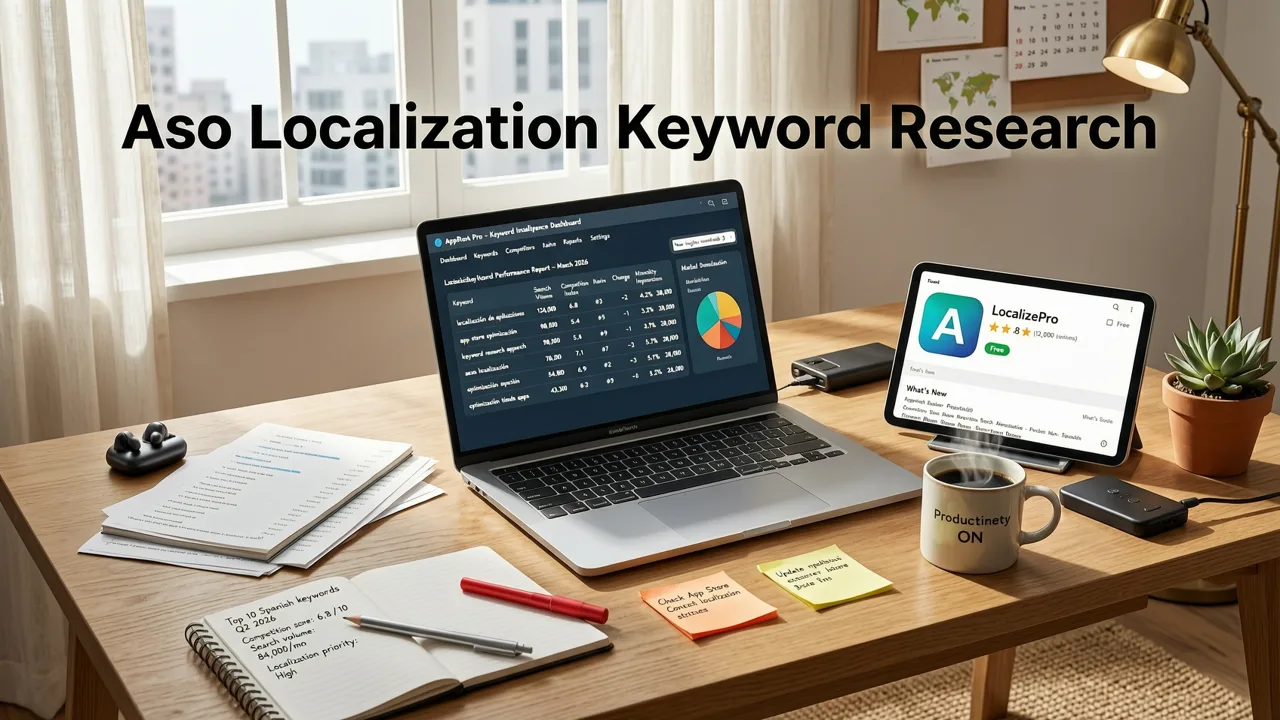
Expanding a mobile application into new territories is one of the most effective scaling strategies available to publishers today. However, simply translating your existing metadata will not capture international audiences. Effective aso localization keyword research requires a deep understanding of regional search behavior, cultural nuances, and platform-specific indexing rules.
Domestic markets often reach a saturation point where user acquisition costs climb and organic visibility stagnates. Global expansion solves this by tapping into high-growth regions where your app category may be less competitive. Yet, success in these markets depends entirely on how well your app speaks the local language—not just linguistically, but contextually.
This guide outlines exactly how to adapt your keyword strategy for global markets. By mastering international metadata optimization, you can drive sustainable organic downloads and build a truly global user base. For startups planning this expansion, integrating these strategies early is critical, as explored in our top ASO services for startups guide.
Localizing app metadata | Keyword research for a language you don't know | Basic ASO for Beginners
by App Growth with Oksana: ASO & Beyond
Translation vs. True Localization in App Metadata
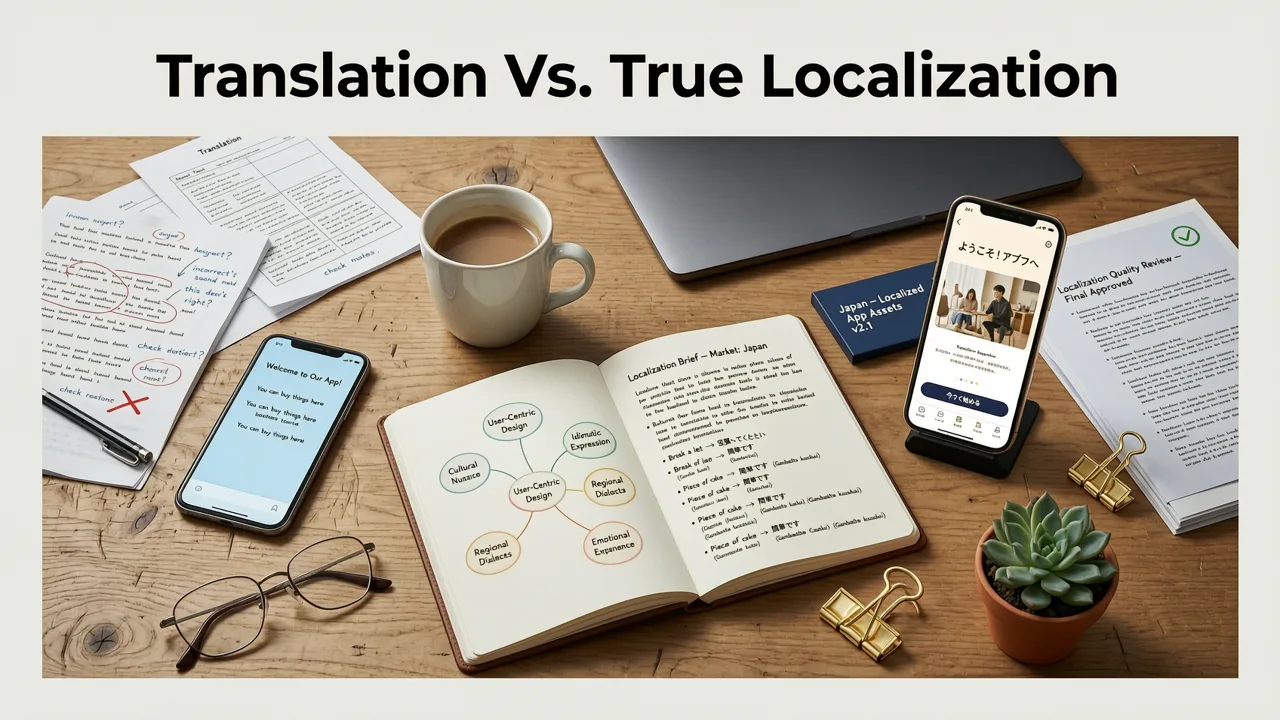
The most common pitfall in global app growth is assuming that direct translation equals localization. It does not. Translation converts words from one language to another. Localization adapts the meaning, intent, and cultural context to match how local users actually search.
Consider search intent. A user in the United States might search for "budget tracker," while a user in Germany might search for a phrase that translates more closely to "finance overview app." If you simply translate your English keywords into German, you will miss the local search terminology entirely.
This is where transcreation becomes vital. Transcreation involves recreating your keyword strategy from scratch in the target language. It requires native speakers who understand both the app's core value proposition and the local app store algorithms. The goal is to capture the local search behavior, not just the literal definition of your features.
Step-by-Step Framework for Global Keyword Strategy
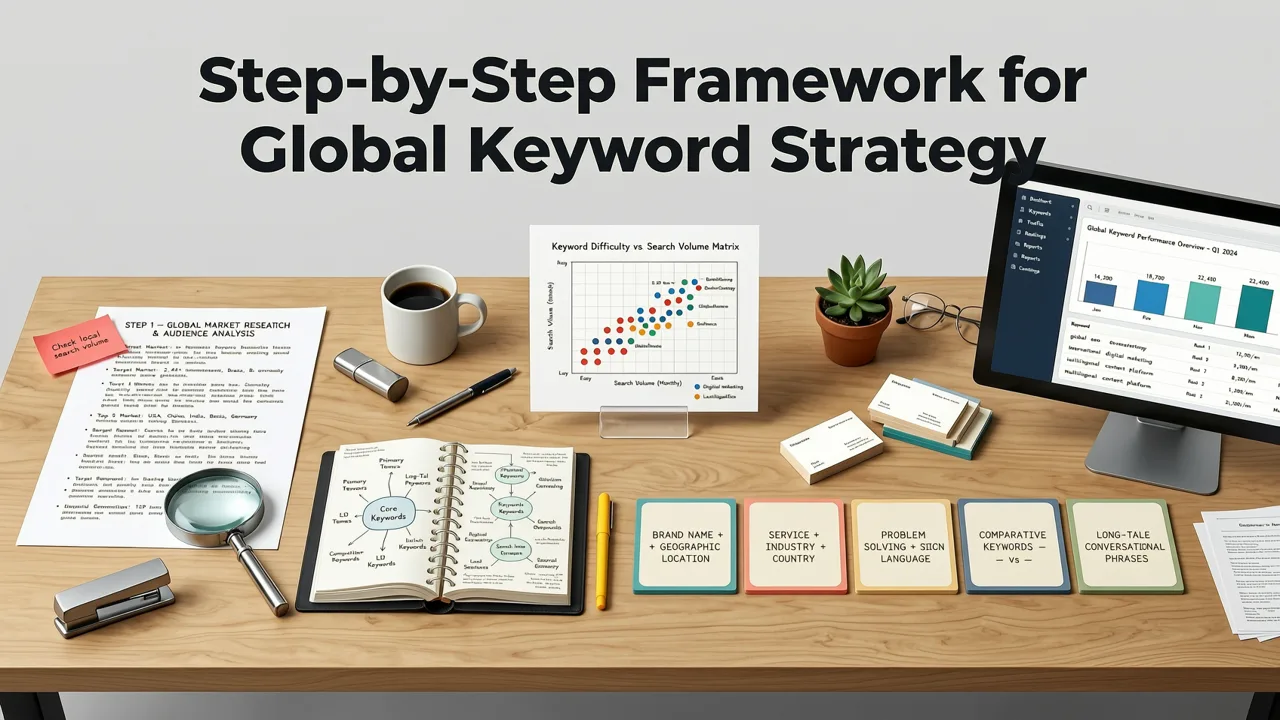
Executing a successful international rollout requires a structured approach. Rushing into dozens of languages simultaneously dilutes your resources and often leads to poor metadata quality. Follow this framework to build a scalable localization strategy.
1. Prioritize Your Target Markets
Analyze your current user data, revenue potential, and market size to identify the top three to five regions for initial expansion. Look at macroeconomic indicators, smartphone penetration rates, and the competitive density of your specific app category in those regions. Focusing your efforts allows you to refine your process before scaling to secondary markets.
2. Engage Native ASO Specialists
Never rely solely on automated translation tools for your metadata. Automated tools lack the contextual awareness required to understand app store search intent. Hire native-speaking ASO specialists or local marketing consultants who can identify the exact phrases, slang, and industry terms used by your target demographic in that specific country.
3. Map and Categorize Local Keywords
Once you have a list of local terms, categorize them by relevance, search volume, and difficulty. Map these keywords to your metadata fields. Ensure that your highest-converting, most relevant terms are placed in the most heavily weighted fields, such as the app title and subtitle. Maintain a strict hierarchy to avoid keyword cannibalization within the same language package.
4. Conduct Regional Competitor Analysis
Your main competitors in the US might not be the same as your main competitors in Japan or Brazil. Identify the top-ranking apps in your target category for each specific locale. Analyze their metadata, visual assets, and feature highlights. Understanding what the local market leaders are doing provides a baseline for your own keyword and conversion strategy.
Platform Differences: Apple App Store vs. Google Play
A critical component of aso localization keyword research is understanding that Apple and Google handle localization differently. Failing to account for these structural differences will result in indexing failures and wasted metadata space.
The Apple App Store localizes by country. You can create specific metadata variations for individual countries that share the same language, such as separate listings for French speakers in France versus Canada. Google Play, conversely, localizes by language. A single translation applies to all countries where that language is spoken.
| Feature | Apple App Store | Google Play Store |
|---|---|---|
| Localization Basis | Country / Region | Language |
| App Title Limit | 30 characters | 30 characters |
| Subtitle / Short Description | Subtitle: 30 characters | Short Description: 80 characters |
| Dedicated Keyword Field | 100 characters (indexed) | None (relies on Long Description) |
| Description Indexing | Not indexed for search | Fully indexed (up to 4,000 characters) |
| Keyword Separators | Commas (no spaces) | Natural language integration |
On the Apple App Store, you must utilize the dedicated 100-character keyword field efficiently, separating terms with commas and avoiding spaces. On Google Play, because the description is indexed, your localized keywords must be woven naturally into the long description text to avoid penalties for keyword stuffing.
Critical Mistakes to Avoid in International ASO
Even experienced publishers make errors when expanding globally. Avoiding these common pitfalls will protect your app's visibility and conversion rates in new markets.
- Relying on Machine Translation: Automated tools frequently produce awkward phrasing or incorrect terminology. This not only hurts your search rankings but severely damages user trust and conversion rates.
- Ignoring Local Character Limits: Some languages, like German, require significantly more characters to express the same concept as English. Failing to truncate or adapt your text can result in cut-off metadata, which looks unprofessional and wastes valuable indexing space.
- Neglecting Visual Localization: Keywords drive visibility, but visuals drive downloads. If your screenshots and app previews remain in English while your metadata is in Spanish, users will bounce. Visuals must be adapted for local cultural norms and language. For a deep dive into adapting your creative assets, review our App Store Conversion Rate Optimization guide.
- Forgetting Localized Screenshots Text: The text overlays on your screenshots must be translated and localized. An English overlay on a localized screenshot creates a jarring user experience that kills conversion rates.
Measuring Success and Iterating Your Strategy
Localization is not a set-and-forget task. App store algorithms evolve, and local search trends shift based on cultural events, seasonal changes, and competitor movements. You must continuously monitor your performance in each localized market.
Track keyword rankings, impression share, and conversion rates for each language or country package. If a specific localized keyword is driving impressions but not downloads, your metadata or visual assets may not be resonating with that specific audience. Conversely, if you are not seeing impressions, your keyword selection may be too narrow or poorly indexed.
Implement a routine review cycle. Conducting a comprehensive ASO audit every quarter allows you to identify underperforming localized metadata and reallocate your keyword strategy. Testing new keyword variations in your subtitle or description can yield significant improvements in organic visibility over time.
Building a Sustainable Global Presence
Mastering aso localization keyword research is the foundation of international app growth. It requires moving beyond simple translation to embrace true cultural and contextual adaptation. By understanding platform-specific rules, engaging native experts, and continuously iterating based on local data, you can unlock massive organic growth potential across the globe.
Expanding your app's footprint internationally is a complex but highly rewarding endeavor. If you are ready to scale your app's global presence and need expert guidance to navigate the nuances of international metadata optimization, partnering with a specialized ASO team can accelerate your results and ensure your expansion is built on a solid, data-driven foundation.