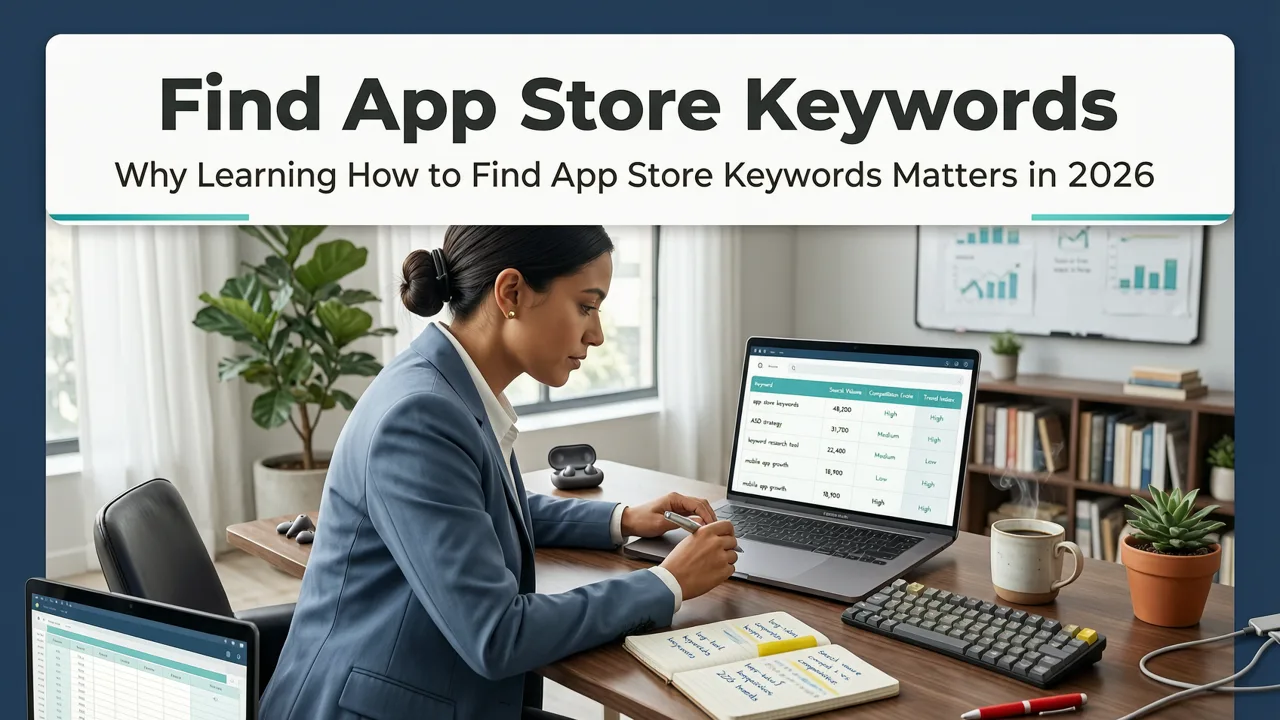
Why Learning How to Find App Store Keywords Matters in 2026
The mobile app ecosystem in 2026 is more crowded than ever, making organic discovery a critical battleground for growth. If you want to know how to find app store keywords that actually drive installs, the secret lies in combining data-driven research with a deep understanding of user intent. Store algorithms have evolved to prioritize semantic relevance, user engagement signals, and precise metadata matching over simple keyword stuffing.
This guide breaks down the exact methodology to uncover high-value, low-competition keywords for both the Apple App Store and Google Play Store. By mastering these research techniques, you can build a metadata strategy that improves mobile app visibility and drives consistent organic app downloads.
Step 1: Brainstorming and Seed Keyword Generation
The foundation of any successful ASO keyword research process begins with a comprehensive brainstorming session. Before diving into analytics, map out the core functionalities, features, and primary use cases of your application. Think about the specific problems your app solves and the exact terminology your target audience uses to describe those problems.
How I do App Store Keyword Research in 2025
by Adam Lyttle
Create a list of seed keywords that represent your app's primary category, features, and target audience. Include broad terms (e.g., "budget tracker"), specific features (e.g., "receipt scanner"), and long-tail variations (e.g., "how to split bills with friends"). This initial list serves as the baseline for your deeper data analysis and ensures you do not miss critical semantic variants that users might search for.
Step 2: Leveraging ASO Tools for Data-Driven Discovery
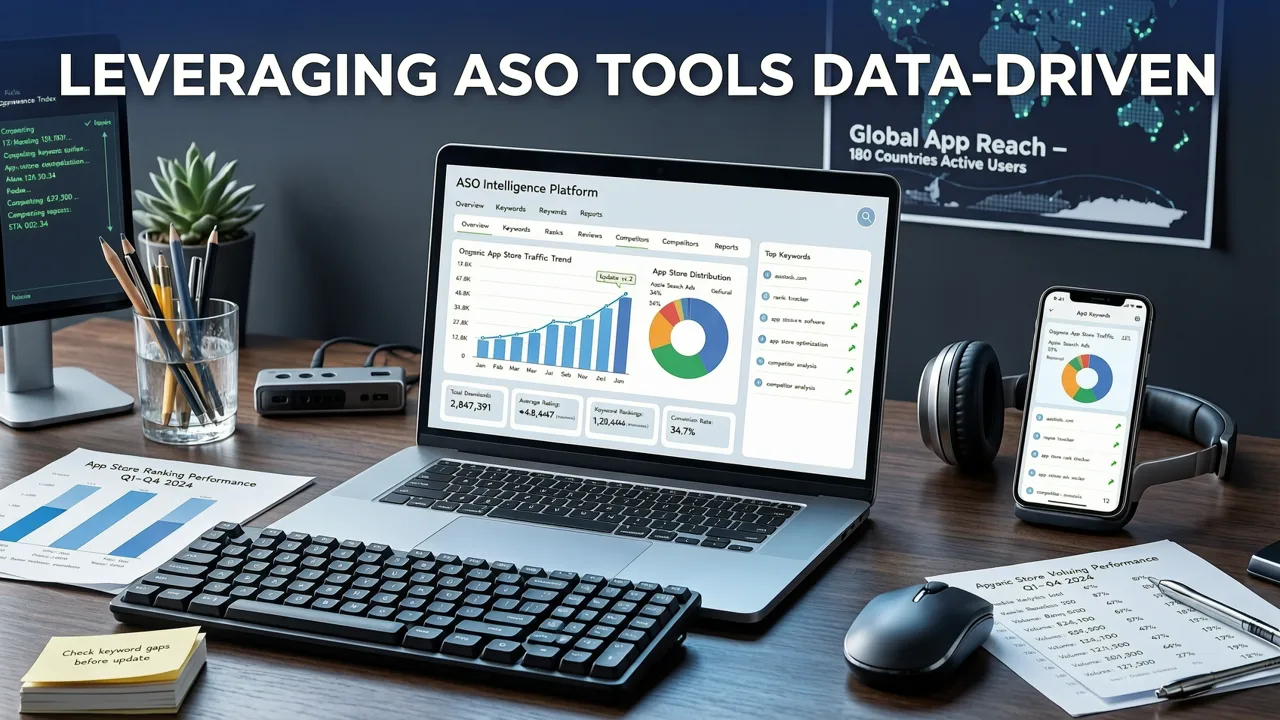
While brainstorming provides the initial direction, specialized software is required to validate search volume, assess competition, and uncover hidden opportunities. Relying solely on intuition will leave significant organic growth on the table. Modern ASO platforms aggregate store data, search trends, and algorithm updates to provide actionable insights.
To evaluate the best platforms for your specific needs, reviewing the 7 Best ASO Keyword Research Tools Reviewed in 2026 is highly recommended. These tools allow you to input your seed keywords and instantly receive metrics on search popularity, keyword difficulty, and estimated traffic. They also provide auto-suggest features that reveal long-tail phrases you might not have considered during your initial brainstorming phase.
Step 3: Analyzing Competitor Metadata and Strategies
Competitor analysis is a cornerstone of effective iOS keyword optimization and Android app indexing. Identify the top five to ten apps in your niche that are successfully capturing your target audience. Examine their metadata carefully, focusing on how they structure their app names, subtitles, and descriptions.
Look for patterns in the keywords they prioritize. Are they focusing on feature-based terms or benefit-driven phrases? Note the keywords they are ranking for but not explicitly including in their visible metadata, as this often indicates they are leveraging backend keyword fields or benefiting from strong conversion velocity. Reverse-engineering successful competitors helps you identify gaps in their strategy that your app can exploit.
Step 4: Evaluating Keyword Difficulty and Search Volume
Not all keywords are created equal. A term with massive search volume is useless if the keyword difficulty is too high for your app to realistically rank. The goal is to find the sweet spot: keywords with sufficient search volume to drive meaningful traffic, but low enough competition that your app can achieve top rankings.
For new apps or those with limited marketing budgets, targeting long-tail keywords is often the most effective strategy. These phrases typically have lower search volume but much higher conversion rates because the user intent is highly specific. As your app gains authority, download velocity, and positive review signals, you can gradually shift your focus toward more competitive, high-volume head terms.
Step 5: Mapping Keywords to iOS and Android Metadata Fields
Understanding how to find app store keywords is only half the battle; you must also know where to place them. The Apple App Store and Google Play Store have fundamentally different indexing rules, character limits, and metadata structures. Applying the same strategy to both platforms will result in suboptimal performance.
Below is a practical comparison of how metadata fields function across both storefronts in 2026:
| Metadata Field | Apple App Store (iOS) | Google Play Store (Android) | Optimization Best Practices |
|---|---|---|---|
| App Name / Title | 30 characters. Highly weighted for indexing. | 30 characters. Crucial for both indexing and conversion. | Include your most important, high-volume keyword and your brand name. |
| Subtitle / Short Description | 30 characters. Indexed by Apple. | 80 characters. Indexed by Google. | Use secondary high-value keywords. Keep it readable and benefit-focused. |
| Keyword Field / Long Description | 100 characters (Hidden). Indexed only by Apple. | 4,000 characters. Indexed by Google. | iOS: Use commas, no spaces, no duplicates. Android: Write naturally, repeat core terms 3-5 times. |
| Promotional Text / Updates | 170 characters. Indexed by Apple. | 500 characters (What's New). Not indexed. | iOS: Use for seasonal keywords and new feature announcements. |
Notice that iOS relies heavily on a hidden keyword field where every character counts, meaning you must avoid spaces after commas and never repeat words already used in the title or subtitle. Conversely, Google Play indexes the entire long description, requiring a natural, readable text where core keywords are repeated strategically to signal relevance to the algorithm.
Step 6: Tracking, Iterating, and Refining Your Strategy
App Store Optimization is not a one-time setup; it is a continuous cycle of testing and refinement. Store algorithms update frequently, and user search behaviors shift with cultural trends and seasonal events. Once your initial metadata is live, you must monitor keyword rankings, impression share, and conversion rates closely.
If certain keywords fail to generate impressions after a few weeks, they should be replaced. If you are ranking on the second page for a highly competitive term, consider swapping it for a slightly less competitive variant to secure a top-three position. Conducting a Professional ASO Keyword Audit Service for App Growth can help identify underperforming metadata and uncover new opportunities you may have missed during your initial research phase.
Optimizing Beyond Keywords: The Role of Conversion Rate Optimization
Keywords will drive users to your app's product page, but they will not install the app if the visual and textual assets fail to convince them. Search intent must be matched by a compelling value proposition. If your keyword strategy brings high traffic but low installs, the issue lies in your conversion assets, not your keyword research.
Elements like your app icon, preview videos, and screenshot captions must immediately communicate your app's core benefits. To ensure your product page is fully optimized to convert the traffic your keywords generate, consult the App Store Conversion Rate Optimization: The 2026 Guide. Aligning your visual identity with your targeted keywords creates a cohesive user experience that dramatically improves install rates.
When to Seek Expert Help for Your Metadata Strategy
While understanding the fundamentals of keyword research is essential for every developer, executing a flawless ASO strategy requires significant time, specialized tools, and continuous monitoring. For teams with limited resources, the learning curve can detract from core product development.
If you are an independent creator or a small startup looking to scale efficiently, finding the right Best ASO Agency for Indie Developers: 2026 Growth Guide can provide the specialized expertise needed to compete with larger studios. An experienced agency can handle the heavy lifting of data analysis, competitor tracking, and metadata iteration, allowing you to focus on building a great product.
Conclusion
Mastering how to find app store keywords in 2026 requires a blend of creative brainstorming, rigorous data analysis, and a deep understanding of platform-specific indexing rules. By leveraging the right tools, analyzing competitor strategies, and continuously refining your metadata, you can build a sustainable engine for organic growth.
Ready to elevate your app's visibility and drive more organic downloads? Explore our comprehensive guides on the best ASO tools and professional audit services to start optimizing your metadata strategy today.